
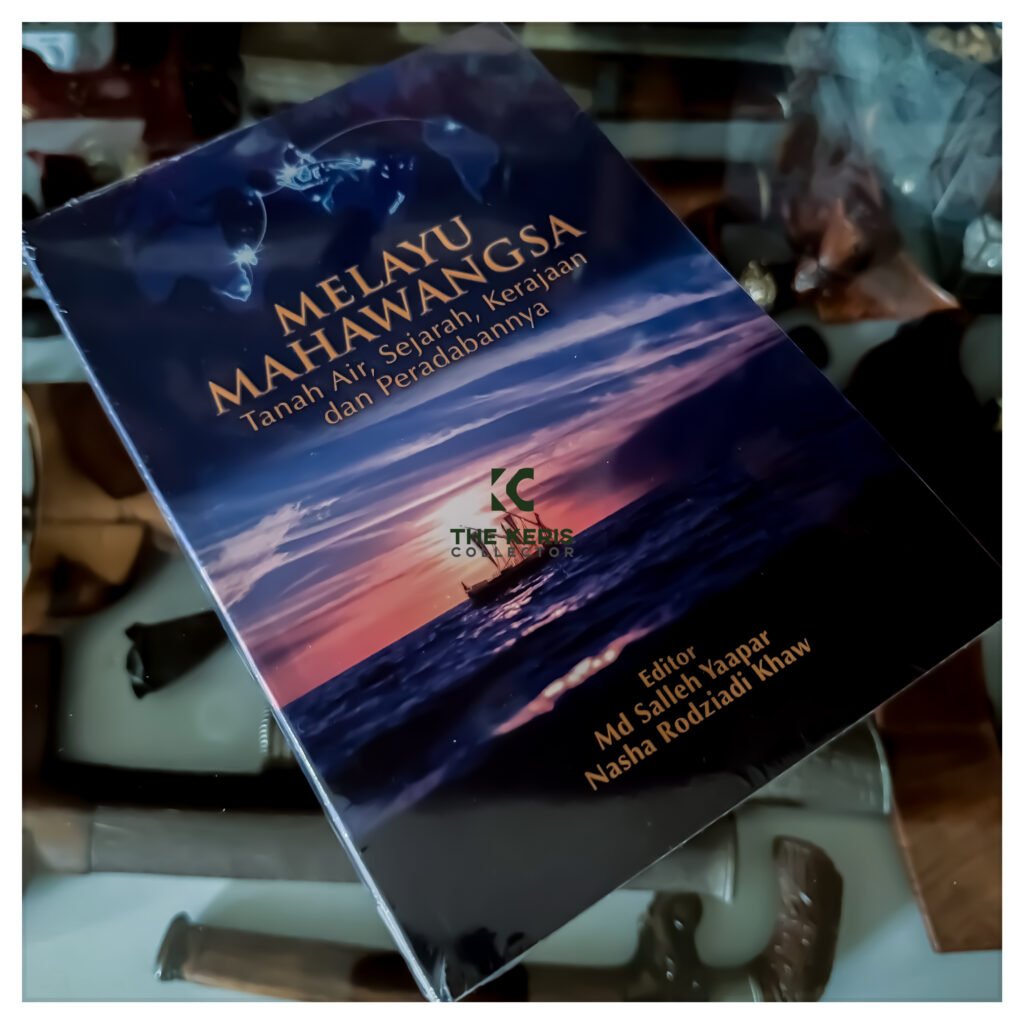
Earlier this afternoon, a package arrived by courier. No fanfare, no prior hint. Just a quiet delivery left at the door. Inside it was a book titled Melayu Mahawangsa: Tanah Air, Sejarah, Kerajaan dan Peradabannya. A simple gift, but it felt like it carried more than printed pages. So, to the friend who sent this, thank you. You probably knew what string this would pull.
I spent a while just holding the book before opening its plastic wrap. There are some titles that make you pause. They speak to something older inside you. This was one of them.
The Malay world is often talked about loudly but remembered softly. We hear grand words about empire, conquest, maritime prowess, lineage and glory. Yet very few of us sit with the quieter side of our story. The slow burn of time. The migrations that changed rivers and shorelines. The rise and fading of courts. The everyday lives of those who never made it into the chronicles but shaped history simply by living it.
When I see the word Melayu paired with Mahawangsa, I think of depth rather than height. I think of old coastlines. I think of monsoon winds. I think of communities moving with the tide rather than forcing themselves against it. I think of our history not as a straight line of kings and battles, but as a woven mat where every strand holds another in place.
This is not about reviving a mythical golden age. And it is definitely not about claiming supremacy or rewriting the past to fit modern pride. That approach cheapens everything. What matters more is understanding. To see where our cultural instincts came from. To ask why we adapted the way we did. To notice the echoes of earlier worlds in the way we speak, eat, greet, negotiate, forgive and remember.
History, when handled honestly, does not inflate the ego. It grounds it.
It reminds us that we come from people who knew how to build boats without nails. Who read the wind like script. Who negotiated peace when war was easier. Who learned from neighbours rather than feared them. Who valued wisdom as much as strength.
Yet, it also reminds us that we made mistakes. We lost things. We let certain truths slip. We sometimes trusted the wrong hands. We sometimes refused to learn until it was too late.
To know all of this is not to mourn or boast. It is simply to be awake.
So I will read this book slowly. Not as a search for answers, but as a re-entry into memory. I want to see what is familiar. I want to see what surprises me. I want to see where the authors choose to linger, and what they leave unsaid.
And maybe along the way, I will remember something that is not written in any archive. Something passed down not through documents, but through silence, posture, instinct and inherited ways of seeing the world.
Sometimes, heritage is not what we prove.
It is what we quietly recognise.
I will share thoughts as I go along.
For now, I’ll simply say this:
The journey begins.