

Books, papers, catalogues, museum collections and research tools for deeper study.
The Keris Collector brings together useful sources for readers who want to move beyond summaries and follow the evidence for themselves.
This resource library focuses on keris, traditional arms, material culture, metallurgy, archaeology, the Malay world and related Southeast Asian heritage.
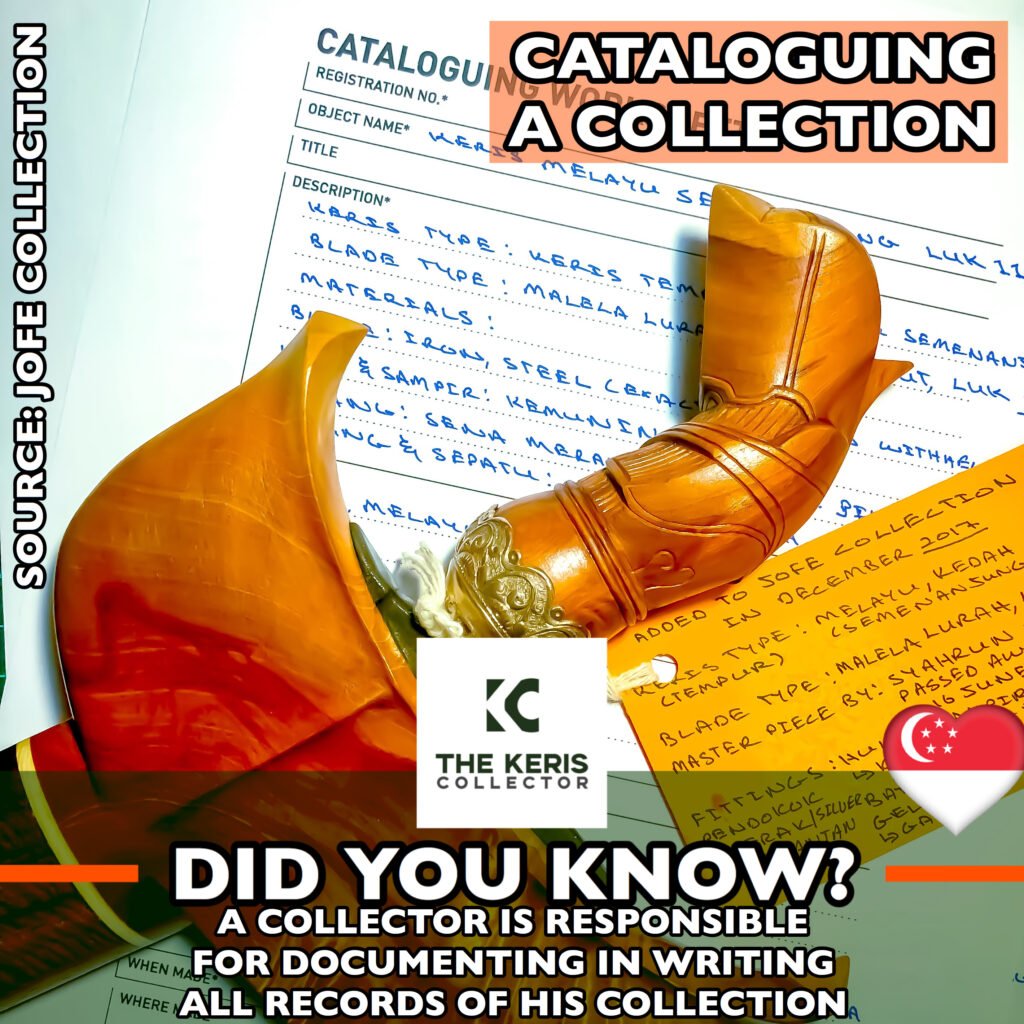
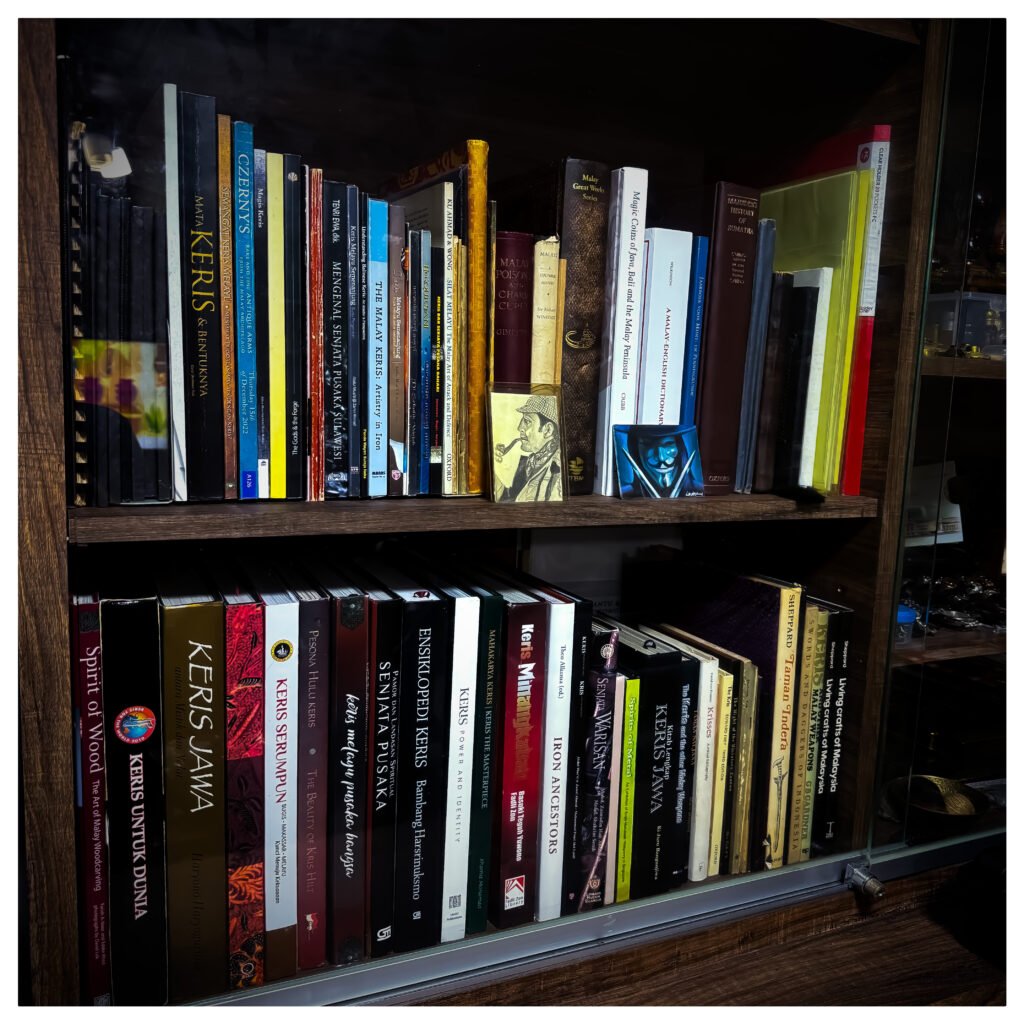
Check out these interesting reads!
- Check back often for more updates!
eBooks
- eBook – 20th Century Impressions of British Malaya
- eBook – Katalog Koleksi Pusaka TBMPC
- eBook – Keris: Materi Muatan Lokal Bidang Kebudayaan
- eBook – Nilai Didaktis Keris Nusantara
- eBook – Origins Of The Malay Keris
- eBook – Senjata Tradisional Daerah Sulawesi Selatan
- eBook – Tulang Mawas Re-Examined
Libib
Why This Library Exists
Good research should make it possible for others to follow the trail.
That means knowing where information comes from.
A museum catalogue may provide an object comparison.
An academic paper may challenge an old assumption.
A digitised book may preserve terminology no longer commonly used.
An archive may contain the photograph that changes an attribution.
The purpose of this library is to make those paths easier to find.
Browse By Category
Foundations
General introductions to keris, material culture and Southeast Asian heritage.
Keris
Books, papers, catalogues and specialist references focused on the keris.
Traditional Arms
References covering related edged weapons and regional arms traditions.
Metallurgy
Research on iron, steel, forging, pamor, archaeometallurgy and material analysis.
Malay World
Sources on history, society, culture, trade and political networks across the Malay world.
Archaeology
Archaeological research relevant to Southeast Asian sites, technology and chronology.
Museum Collections
Online collections, catalogues and institutional object records.
Digitised Books
Historical books and older publications available online.
Journals & Papers
Academic articles, conference papers and substantive research.
Databases & Archives
For searchable repositories, newspapers, archival collections and institutional databases.
Featured Resources (Latest Additions)
Resource Title
Author / Institution:
Resource Type:
Abstract:
TKC Note:
Resource Title

Author / Institution:
Resource Type:
Abstract:
TKC Note:
Resource Title
Author / Institution:
Resource Type:
Abstract:
TKC Note:
Not All Sources Carry The Same Weight
A published claim is not automatically a reliable claim.
When using a source, The Keris Collector considers questions such as:
Who produced it?
What evidence is being used?
Is the source primary or secondary?
Can the claim be independently checked?
Is the material contemporary with the subject being discussed?
Do later findings support or challenge it?
Museum labels, books, oral traditions, academic papers and websites can all be useful.
But they do not all answer the same kinds of questions
Understanding Source Types
Primary Sources
Material produced during or close to the period being studied, such as archival documents, photographs, correspondence or historical records.
Academic Research
Peer-reviewed or scholarly work that develops an argument from evidence and engages with previous research.
Museum & Institutional Sources
Collection records, exhibition catalogues, conservation reports and institutional research.
Historical Publications
Older books and articles that may preserve valuable observations, but also reflect the assumptions of their period.
Oral & Community Knowledge
Traditions, memories and specialist knowledge transmitted through people and communities.
Collector Knowledge
Observations developed through long-term comparison and handling of objects.
Useful research often emerges from comparing several different kinds of evidence rather than depending on one source alone.
New To The Subject?
Understanding The Keris
Start with accessible introductory resources before moving into specialist classifications.
Researching An Object
Look for comparative examples, museum records, catalogues and provenance material.
Testing A Historical Claim
Begin with the earliest source for the claim, then compare archaeological, documentary and academic evidence.
Museum Collections
Museum databases can be extremely useful for comparative study.
They may provide:
- object photographs
- dimensions
- provenance
- acquisition history
- regional attribution
- dating
- material descriptions
- catalogue references
But museum records should still be read critically.
Attributions can change, older records may use outdated terminology, and some entries contain inherited assumptions.
Institutional authority is useful evidence, not immunity from revision.
Older Sources, New Access
Digitisation has made many historical books, newspapers, reports and catalogues accessible to researchers who could once only consult them in specialist libraries.
These sources can reveal:
- historical terminology
- older object descriptions
- early photographs
- collecting histories
- colonial classifications
- trade records
- contemporary observations
But historical sources also need context.
The fact that something was written in 1900 does not automatically make it accurate.
Research Notes
Not every useful discovery needs to become a full essay.
Research Notes can highlight:
- newly found sources
- interesting catalogue entries
- conflicting attributions
- useful museum records
- obscure historical references
- questions worth pursuing
Follow The Source
When citing historical or cultural claims, try to return to the strongest available source rather than repeating a summary of a summary.
Where possible:
- read the original material
- check dates
- compare editions
- distinguish quotation from interpretation
- note uncertainty
- check whether later research has revised the conclusion
A source is most useful when you understand what it actually establishes.
Know A Useful Source?
Researchers, collectors and institutions are welcome to suggest books, papers, catalogues, museum collections or databases that may be relevant to this library.
Submission does not guarantee inclusion.
Resources are selected according to relevance and usefulness.
Continue The Research
Essays
See how sources are used in longer investigations.
Collection
Compare sources against real objects.
Research & Collaboration
Working on a larger research question?
Follow The Evidence
A useful source does not end the question.
It gives you somewhere better to continue.
Read widely.
Compare carefully.
Check what the source actually says.
And remain willing to revise the conclusion.
Preserve Through Discovery.