

What Is A Keris?
More than a blade. A cultural object shaped by craftsmanship, history, identity and interpretation.
The keris is one of Southeast Asia’s most recognisable traditional arms, but understanding it simply as a weapon leaves much of its story unexplored.
Its blade, fittings, materials, craftsmanship and cultural meanings differ across regions, periods and communities.
To understand a keris properly, we begin with the object itself, then follow the evidence outward.
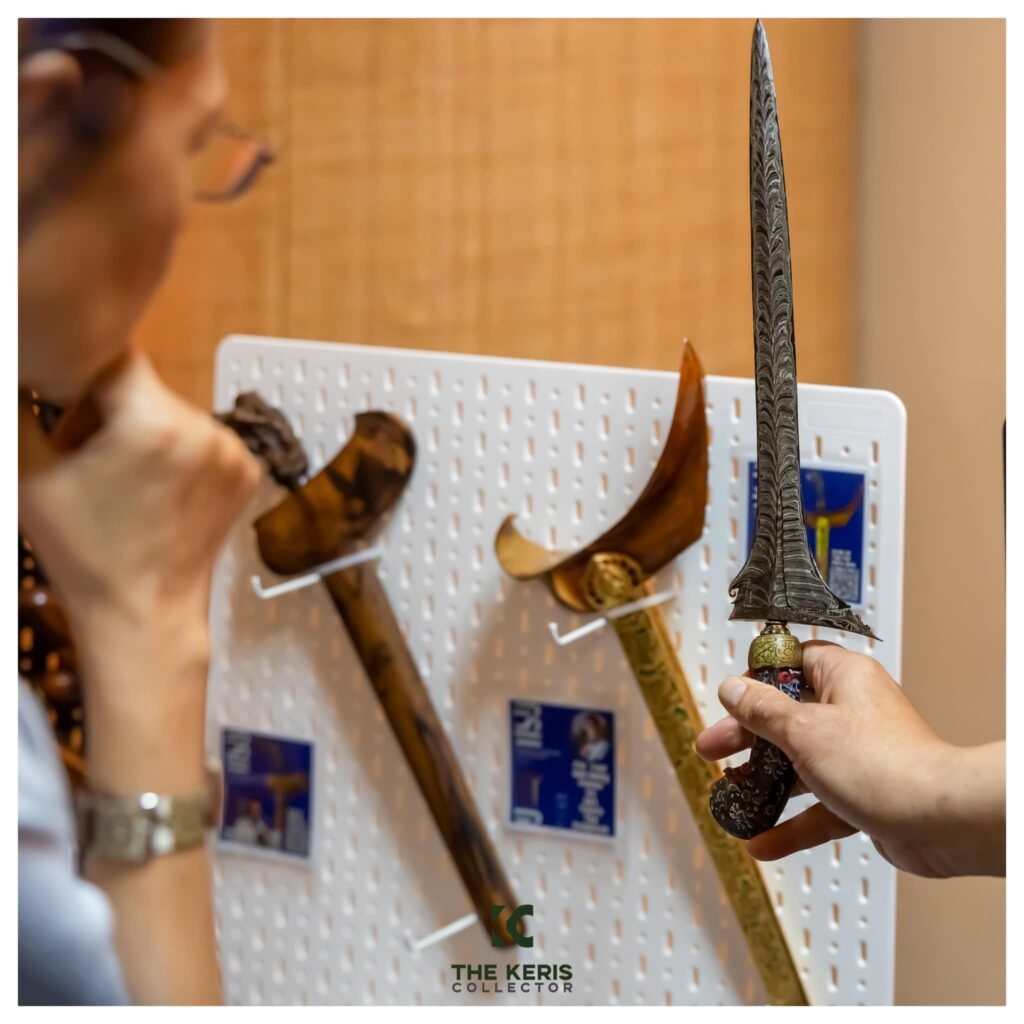
More Than A Weapon
Across different places and periods, the keris has functioned as more than an edged weapon.
It may also be understood as an object of dress, craftsmanship, status, inheritance, ceremony, diplomacy and family memory.
These meanings should not be treated as identical everywhere.
A keris associated with Java, the Malay Peninsula, Sumatra, Sulawesi or other parts of the region may reflect different traditions of form, terminology, dress and use.
That diversity is part of what makes the keris worth studying.
Here are some videos to help you understand what is a keris!
- Check back often for more updates!
Latest Videos:
- 28 Aug 2026 – Stuck Keris Blade? Don’t Force It.
- 2026 – When Someone Else Asks the Questions: My Conversation with Raja Razie on RR.Unscripted
- 2025 – Channel News Asia | Hobsessions: Blades of Passion
More Videos On Our YouTube Channel:
Watch: An Introduction To The Keris
This video invites you into a world where culture, craft, and spirit meet in steel.
It explores what truly makes a keris, not just by form or function, but by soul and story.
From island to island, the keris left its mark, crossing kingdoms, belief systems, and generations.
To trace its path is to follow the echoes of an ancient civilisation that still breathes through every blade.
Here is a memorable video produced by the National Heritage Board in collaboration with the National Museum of Singapore back in 2018. It was later featured in DigiMuse Presents, an exhibition held at the National Museum from 4 to 26 August 2018.
DigiMuse Presents was a bold experiment that blended heritage and emerging technology. Through virtual and augmented reality, interactive storytelling, and artificial intelligence, it invited visitors to rediscover Singapore’s past in unexpected ways.
This particular video was part of that initiative—a glimpse into how our traditions, like the world of the keris, could be reimagined through digital innovation. It reminds us that even the most ancient of crafts can find new life in the modern age, if only we look at them
Anatomy Of A Keris (I)
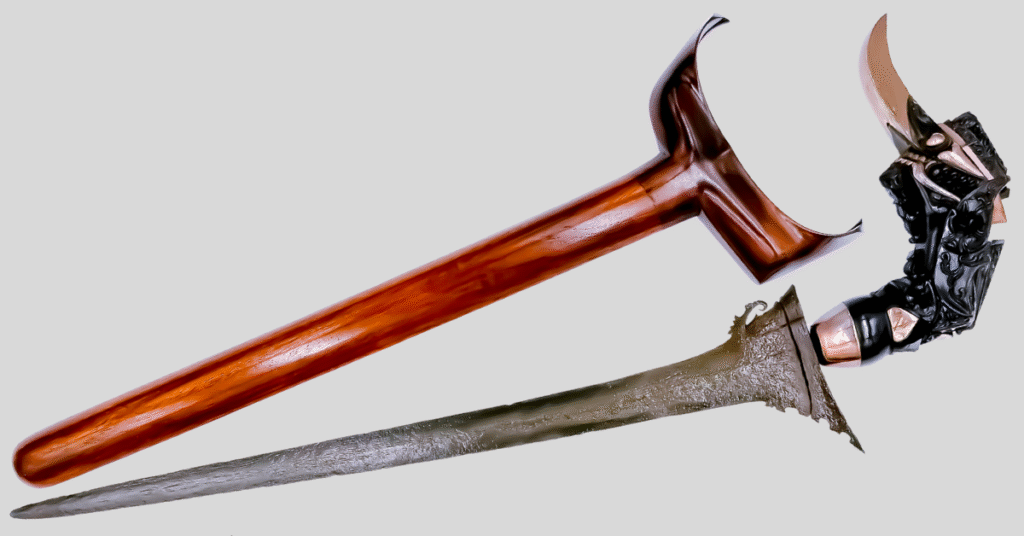
A complete keris consists of several related components.
At a basic level these include:
- blade
- ganja, where applicable
- hilt
- hilt fittings
- sheath
- upper sheath section
- lower sheath body
- decorative or protective fittings
Terminology varies between regions and traditions.
The same component may therefore be known by different names depending on cultural context.
Straight Keris Blades
Not every keris has a wavy blade.
Straight blades are historically important and occur across many keris traditions.
Their simpler silhouette does not imply lesser quality, status or cultural significance.
Luk Keris Blades (Wavy Blades)
The curves of a wavy keris blade are commonly described as luk.
Different traditions have developed systems for recognising and discussing these forms.
The number of luk should not, by itself, be treated as proof of age, rarity, quality or extraordinary significance.
Blade shape is one clue among many.
Counting Keris Luk(s)
Anatomy Of A Keris (II)
Anatomy Of A Keris (III)
Keris From Space?
Keris Pamur | Pamor
One Object, Several Histories
A keris blade and its current fittings do not necessarily share the same history.
A blade may survive several generations of hilts and sheaths.
Fittings can be replaced because of wear, damage, inheritance, changing fashion, ceremonial requirements or movement between regions.
That means a question such as:
“How old is this keris?”
may actually contain several different questions.
How old is the blade?
How old are the fittings?
When were they brought together?
What can be demonstrated, and what has merely been assumed?
This is one of the most important habits in serious keris study.
Regional Traditions
Java
A large and highly developed range of blade, hilt, sheath and classification traditions.
Malay Peninsula
Keris traditions associated with Malay communities, courts and regional centres of craftsmanship.
Sumatra
Distinctive traditions associated with regions including Palembang, Minangkabau and others.
Sulawesi & Bugis Worlds
Forms associated with Bugis and Makassarese cultural networks and their movement across the archipelago.
Patani & The Northern Malay World
Traditions connected to the cultural geography linking present-day southern Thailand and the northern Malay Peninsula.
Wider Southeast Asia
The keris also appears across other interconnected communities and historical networks.
Modern political borders should not be projected too neatly onto older cultural landscapes.
The Keris In Singapore
Singapore’s history is closely connected to the wider Malay world.
People, objects, traditions and ideas moved continuously between Singapore, Johor, Riau, Sumatra, Java, Sulawesi and other parts of the region.
The keris therefore has a place within Singapore’s cultural history even though Singapore is not usually discussed as a major historical keris-making centre.
Its presence reflects wider histories of migration, family networks, trade, political relationships and cultural exchange.
Myth, Belief & Evidence
The keris is surrounded by stories.
Some concern history.
Others involve symbolism, spiritual significance, supernatural qualities, famous makers or extraordinary materials.
Those traditions deserve to be documented because they are part of the cultural life of the keris.
But cultural meaning and historical proof are not the same thing.
At The Keris Collector, we try to distinguish between:
- What can be observed
- What tradition says
- What historical sources support
- What remains uncertain
Respecting tradition does not require accepting every historical claim uncritically.
How Old Is A Keris?
Age is one of the questions collectors ask most often.
It is also one of the easiest areas for false precision.
Possible evidence may include:
- construction
- form
- materials
- workmanship
- condition
- fittings
- provenance
- comparable objects
- historical documentation
Even taken together, these may support only an approximate period rather than a precise year.
A confident answer is not automatically a reliable one.
Good attribution should be accompanied by an explanation of the evidence.
Collecting With Context
A collection becomes more valuable as a body of knowledge when objects are properly documented.
Useful records may include:
- photographs
- measurements
- provenance
- ownership history
- purchase information
- regional attribution
- material observations
- condition
- research notes
- references
Stories attached to an object should also be recorded.
But the record should distinguish between documented information, informed interpretation and inherited claims.
Responsible Collecting In Singapore
Collectors in Singapore should understand that traditional weapons may be subject to legal and regulatory requirements.
Requirements can affect matters such as possession, acquisition, transport, import and export.
The Keris Collector supports responsible and lawful collecting.
For legal or regulatory questions, collectors should consult current official Singapore sources rather than rely solely on historical guidance or informal advice.
A Living Introduction
Keris scholarship continues to develop.
New research, comparative material and closer examination can change how objects and traditions are understood.
This page is therefore intended as a living introduction rather than the final word on the subject.
As The Keris Collector’s research develops, further examples, sources and investigations will be linked here.
Start With The Object
Look closely.
Ask what you can actually observe.
Find the context.
Follow the evidence.
Then decide what the story can reasonably support.
Preserve Through Discovery.