

Khairi Johari @ Pak JoFe
Collector. Researcher. Heritage Interpreter.
Khairi Johari, better known as Pak JoFe, is the founder of The Keris Collector.
He has collected kerises since 1997 and has spent decades studying the objects, stories, regional traditions and historical questions surrounding them.
His work today brings together collecting, research, heritage interpretation, public education, media and cultural experiences.
He is also a licensed Singapore tourist guide and MOE-registered instructor.

It Started With Collecting
Pak JoFe began collecting kerises in 1997.
What started as an interest in the object itself gradually became something larger.
The more he collected, the more questions appeared.
Why did one region shape or dress a keris differently from another?
How could two similar-looking objects carry very different stories?
Which traditions were well documented?
Which claims had simply been repeated until they became accepted?
Collecting became a way of learning how to look more carefully.
That habit still shapes The Keris Collector today.
From Objects To Questions
The keris is often surrounded by certainty.
A confident age.
A named maker.
A royal association.
A supernatural explanation.
A story about rare material.
Pak JoFe’s approach is to slow that process down.
First, observe the object.
Then ask where the claim came from.
Compare it with other material.
Look for the strongest evidence available.
And remain comfortable saying:
“We do not know yet.”
That is not a weakness.
It is often where better research begins.
A Collector’s Perspective
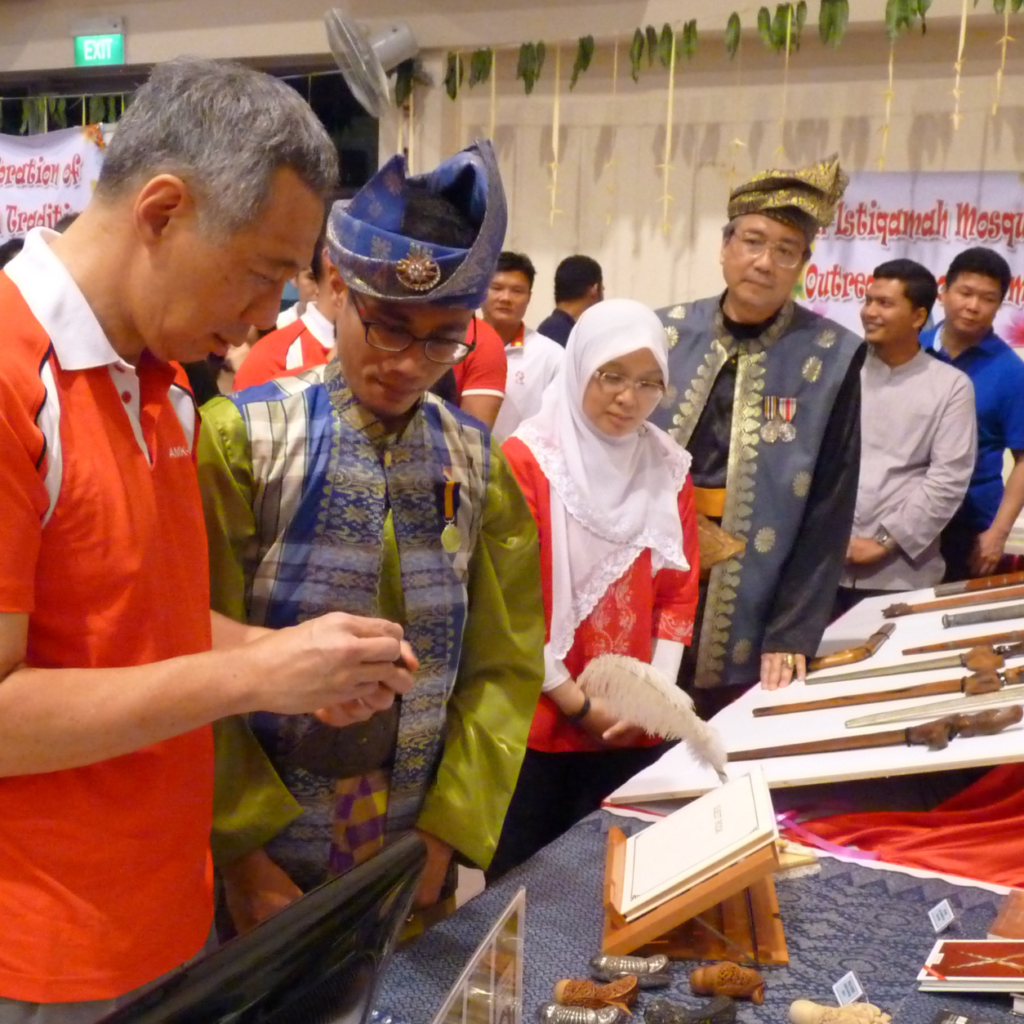
Long-term collecting creates a form of practical familiarity that is difficult to gain from photographs alone.
Handling, comparing and documenting objects over time can reveal differences in proportion, construction, wear, materials and workmanship that may not be obvious at first glance.
That experience does not replace scholarship, scientific analysis or specialist expertise.
It complements them.
The strongest understanding often comes from bringing different kinds of knowledge together.
A Cross-Disciplinary Background
Pak JoFe’s approach to heritage has also been shaped by a multidisciplinary educational background spanning communications, engineering, computing and business.
His studies include Mass Communications with an emphasis on Journalism and Liberal Arts, Mechatronics Engineering, Computing Science and Business Management.
That range of disciplines has influenced how he approaches objects and historical questions:
through observation, documentation, technical curiosity, communication and critical enquiry.
Building The Keris Collector
The Keris Collector began as a platform to share the collecting journey and knowledge around the keris.
Over time, it expanded into a broader cultural practice involving:
- object research
- long-form essays
- videos
- heritage interpretation
- cultural experiences
The keris remains the foundation.
But the larger subject is culture.
- collector advisory
- media and production consultation
- talks and workshops
- research collaboration
Based In Singapore
Pak JoFe approaches heritage from Singapore while recognising that Singapore’s cultural history has never existed in isolation.
The movement of people, objects and ideas has long connected Singapore with Johor, Riau, Sumatra, Java, Sulawesi and other parts of the wider Malay world.
Those regional relationships shape how he approaches the keris, material culture and Singapore’s own heritage.

Making History Useful
Knowing something is not the same as being able to explain it well.
Heritage interpretation is about helping people understand why an object, place or historical question matters.
That may happen through:
- a walking experience
- a video
- an essay
- a conversation over lunch
- a museum programme
- a production consultation
- a talk
- an object on a table
Pak JoFe’s aim is to make complex subjects accessible without flattening them into simple stories.
Public Education & Media
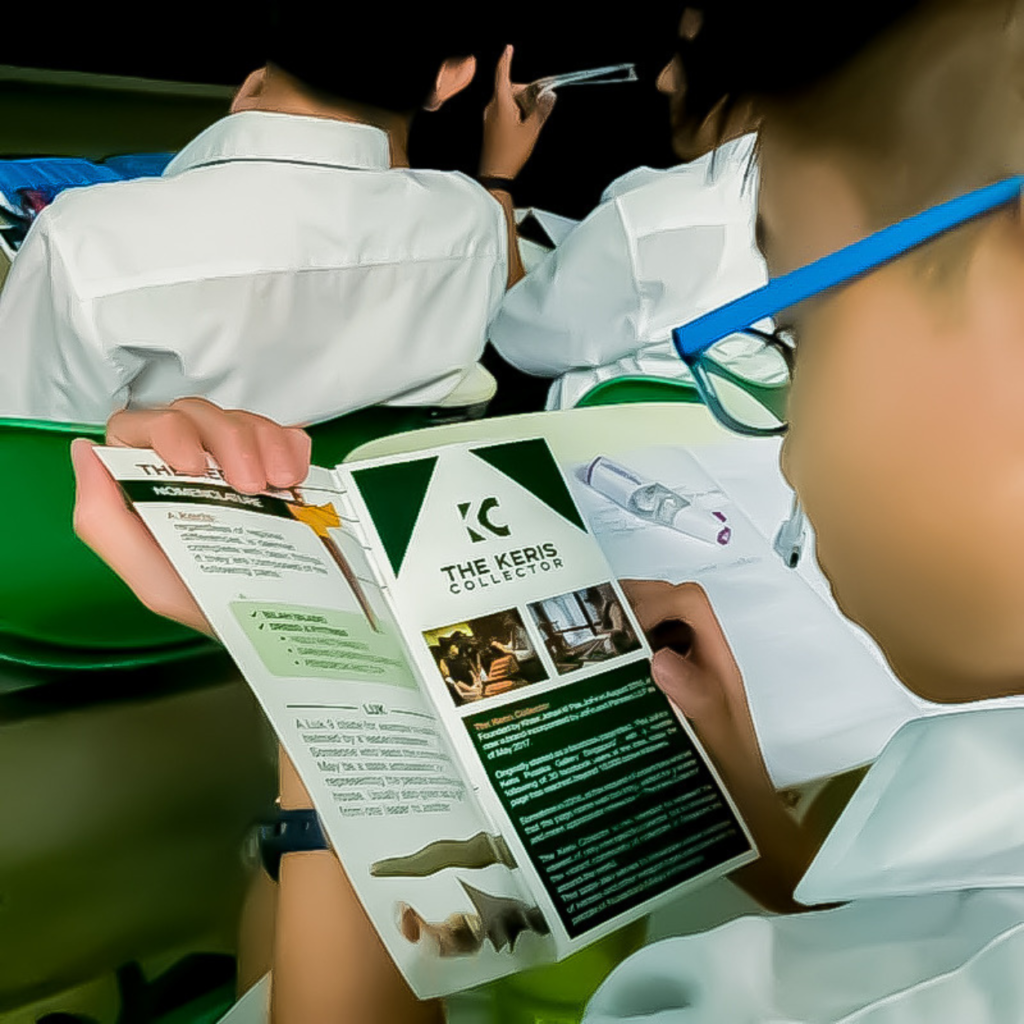
Pak JoFe’s public engagement with keris and Malay cultural heritage extends back more than two decades.
His work and interests have appeared in Singapore media including Berita Harian, Berita Minggu and Channel NewsAsia, with public media engagement dating back to 2005.
Through The Keris Collector, this public-facing work has expanded into video, interviews, heritage programmes, talks, collaborations and specialist cultural contributions.
Heritage In Place
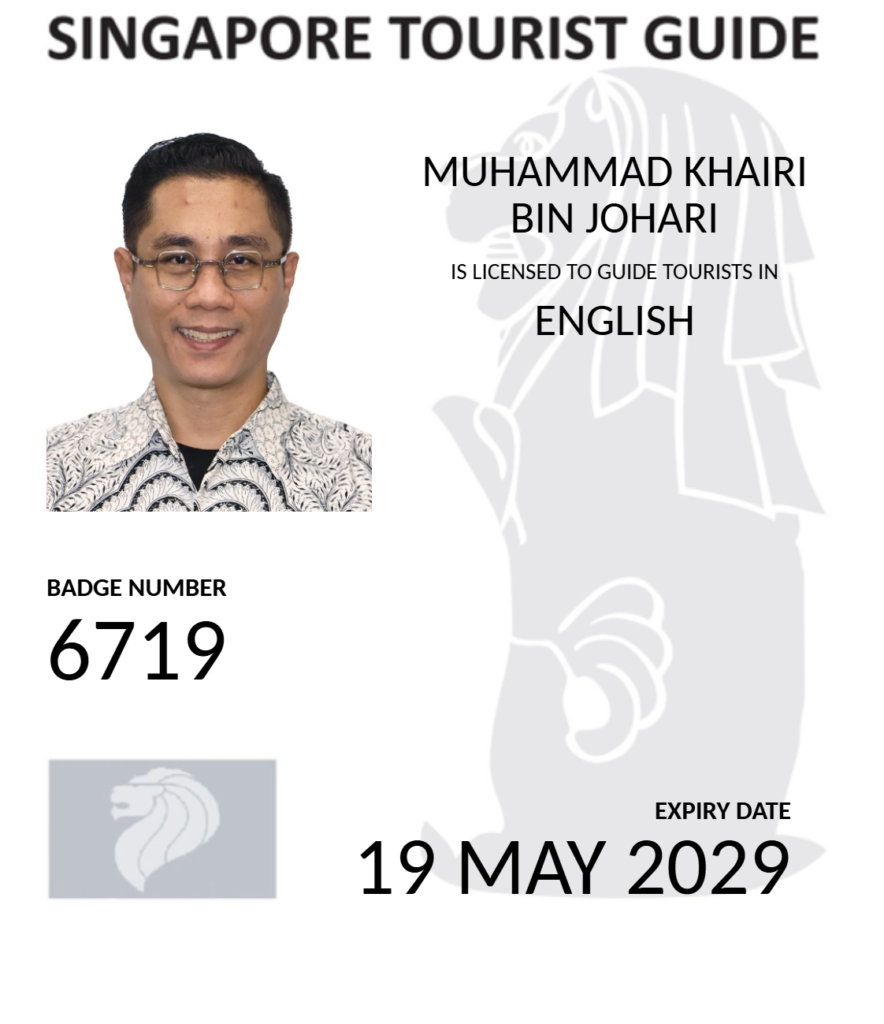
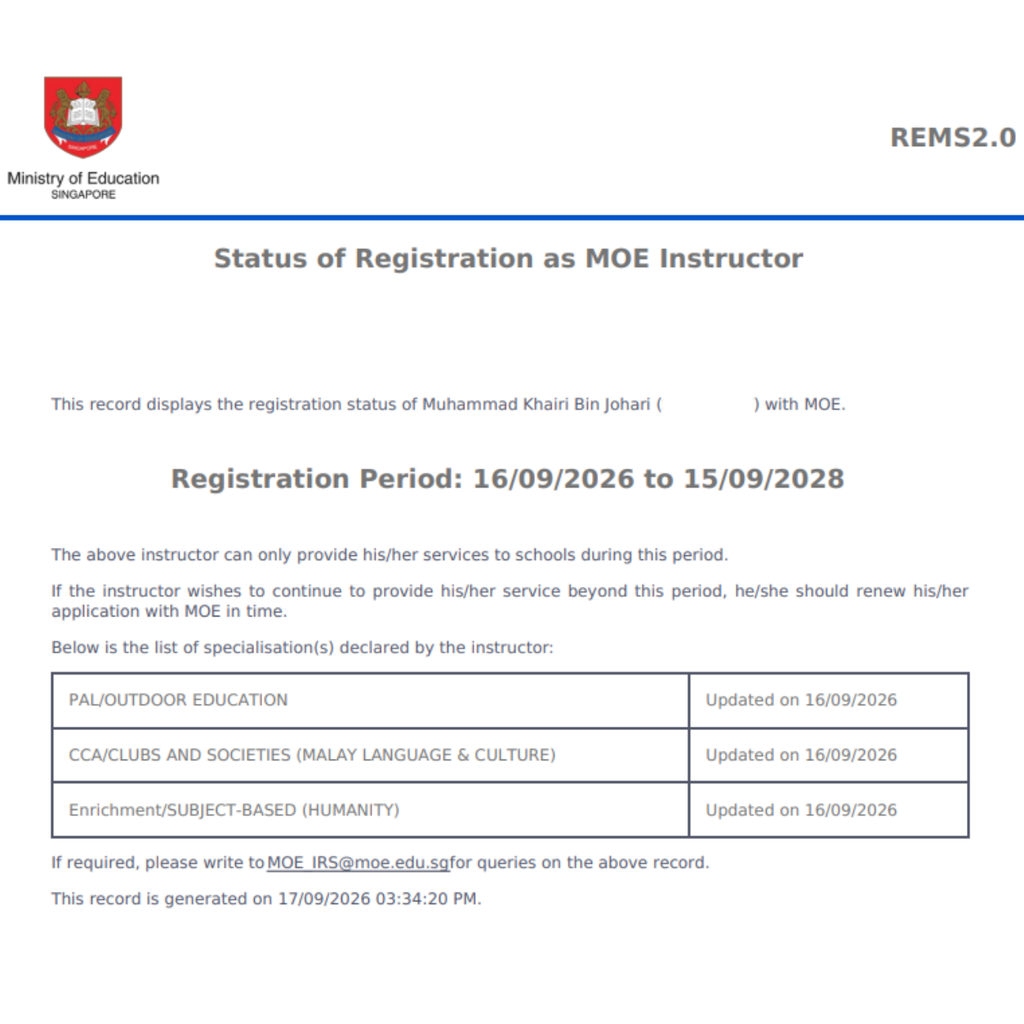
Pak JoFe is also a licensed Singapore tourist guide and an MOE-registered instructor.
His MOE instructor registration covers declared specialisations in Malay Language & Culture, Humanities enrichment, and PAL/Outdoor Education.
These roles allow his work to move beyond the collection and into schools, heritage spaces and the city itself.Places such as Kampong Glam, museums, historic districts and everyday urban landscapes can be explored through the same approach used with objects:
Look closely, establish context, ask better questions, and follow the evidence.
How Pak JoFe Works
Start With Observation
Describe what is actually present before deciding what it means.
Separate Evidence From Story
Record tradition and memory, but distinguish them from what can be independently supported.
Respect Uncertainty
Not every object or historical question has a neat answer.
Compare Widely
One object becomes more useful when compared with others, historical sources and regional context.
Keep Learning
New evidence should be allowed to change old conclusions.
Make Knowledge Useful
Research matters more when it can help collectors, audiences, institutions and communities understand something better.
Beyond The Keris
Although the keris is central to Pak JoFe’s work, his interests extend into the wider worlds that surround it.
These include:
- material culture
- traditional arms
- craftsmanship
- archaeology
- metallurgy
- collecting history
- heritage interpretation
- identity
- Singapore history
- the Malay world
- museums and exhibitions
The object is often the starting point.
The wider historical question is where the journey leads.
Selected Cultural Engagements
Over the years, Pak JoFe has participated in heritage activities, cultural programmes and collaborations involving organisations and institutions in Singapore.
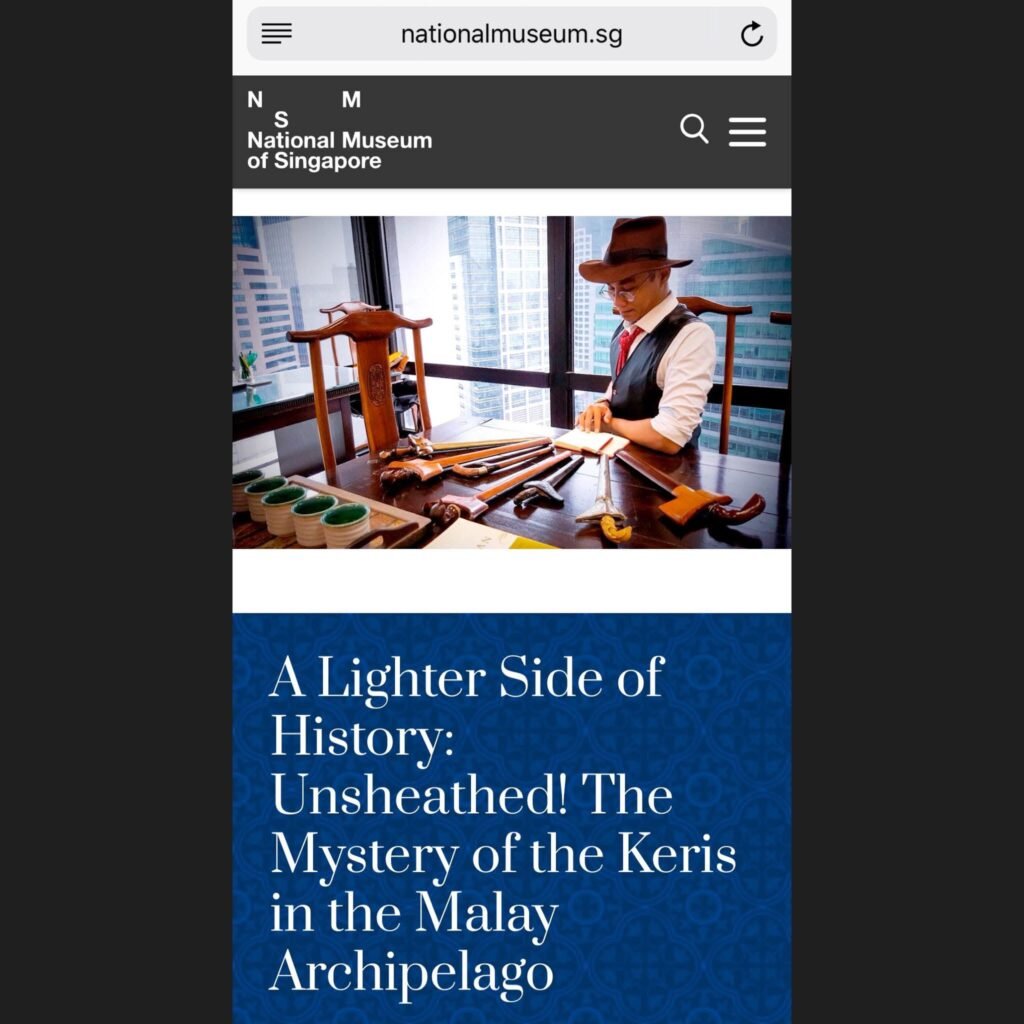
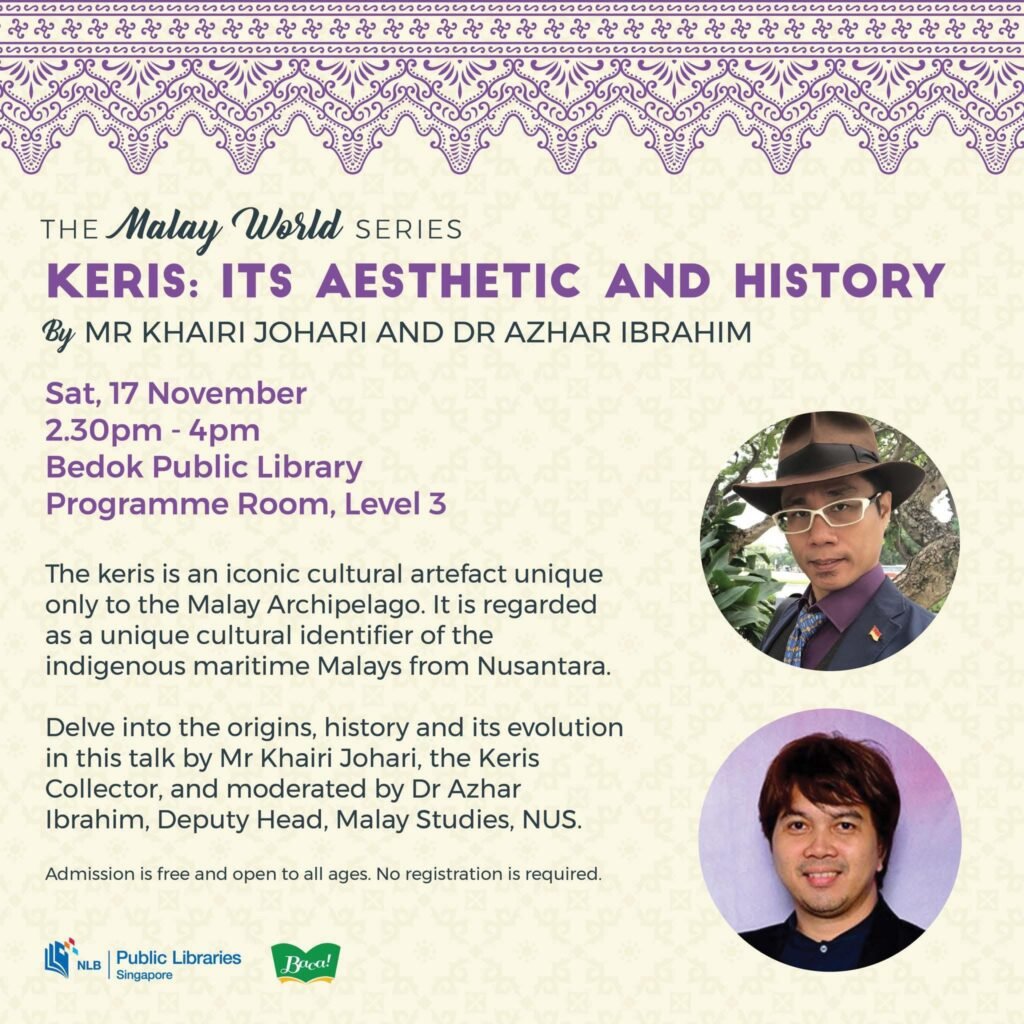
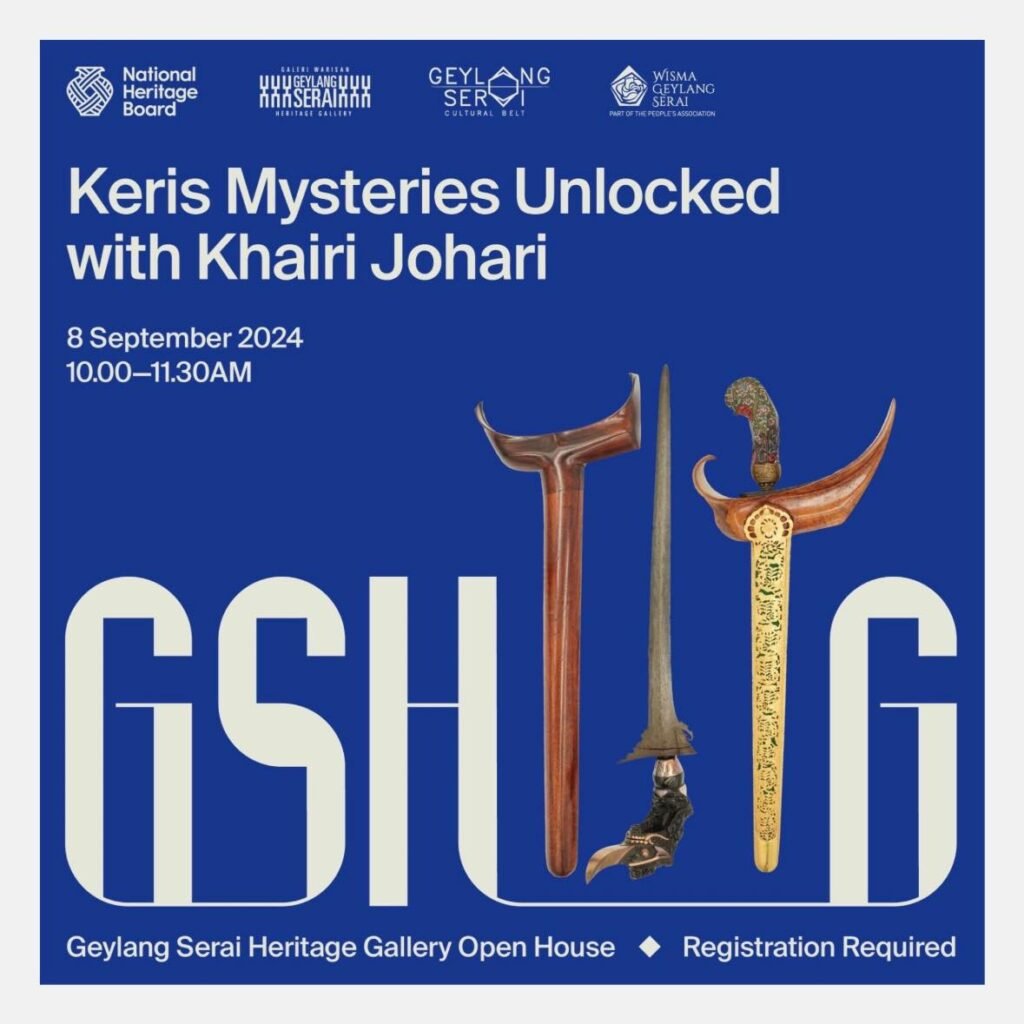
His engagement has included work connected with institutions such as the Malay Heritage Centre and the National Museum of Singapore, alongside community initiatives, talks, media and independent heritage projects.
NHB (2018)
NLB (2019)
GSHG (2024)
Work With Pak JoFe
Experiences
Explore Singapore through collector-led cultural experiences.
Advisory
Discuss objects, collections, productions or cultural questions.
Talks & Collaborations
Invite Pak JoFe for talks, programmes, research or appropriate collaborative work.
Why I Keep Doing This
I started collecting kerises because I was fascinated by the objects.
I stayed with them because the questions never stopped.
Every object seems to lead somewhere else: another region, another craft tradition, another historical source, another story that needs to be tested.
I do not expect to know everything.
What matters to me is continuing to look closely, ask better questions and share what I discover along the way.
Pak JoFe
Start With Curiosity
A keris.
A neighbourhood.
A historical claim.
A collection.
A cultural question.
The subject may change.
The method remains much the same.
Look closely.
Ask what the evidence supports.
And keep discovering.
Preserve Through Discovery.