
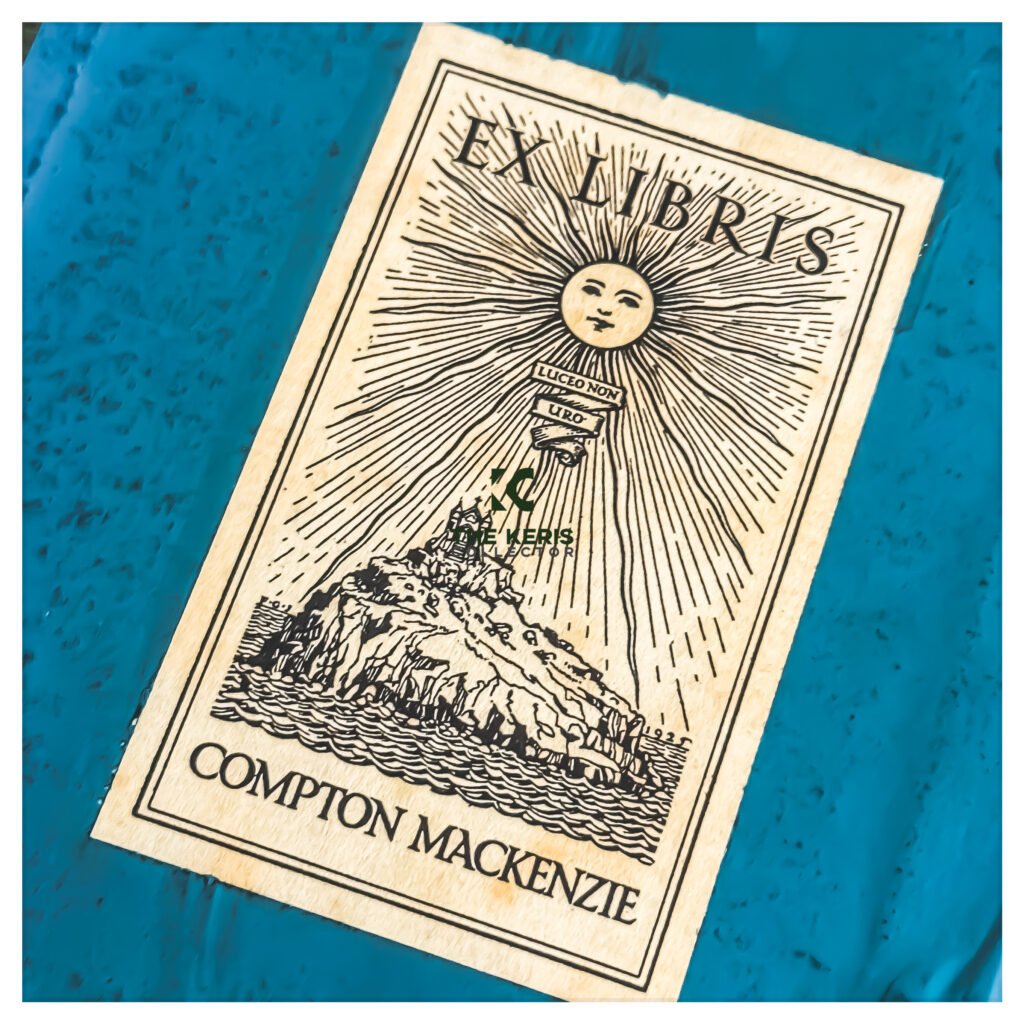
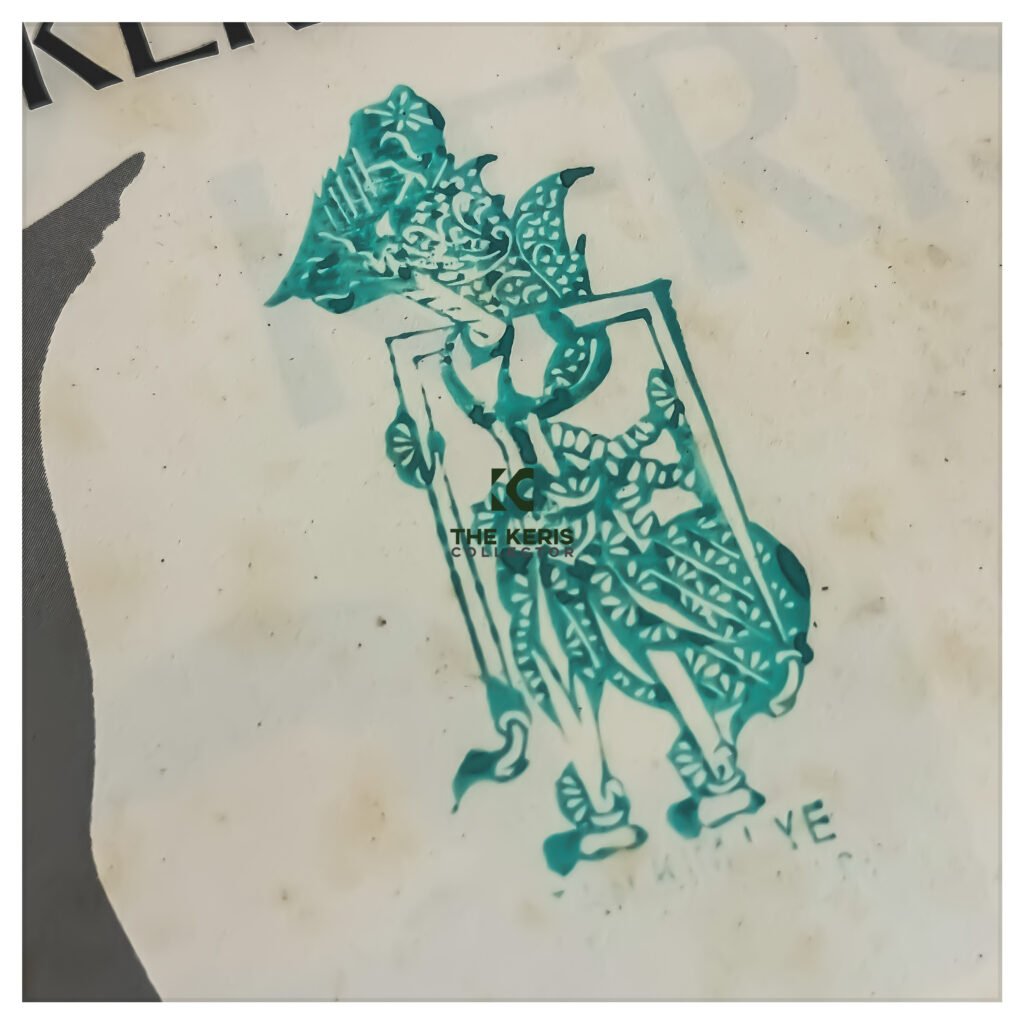
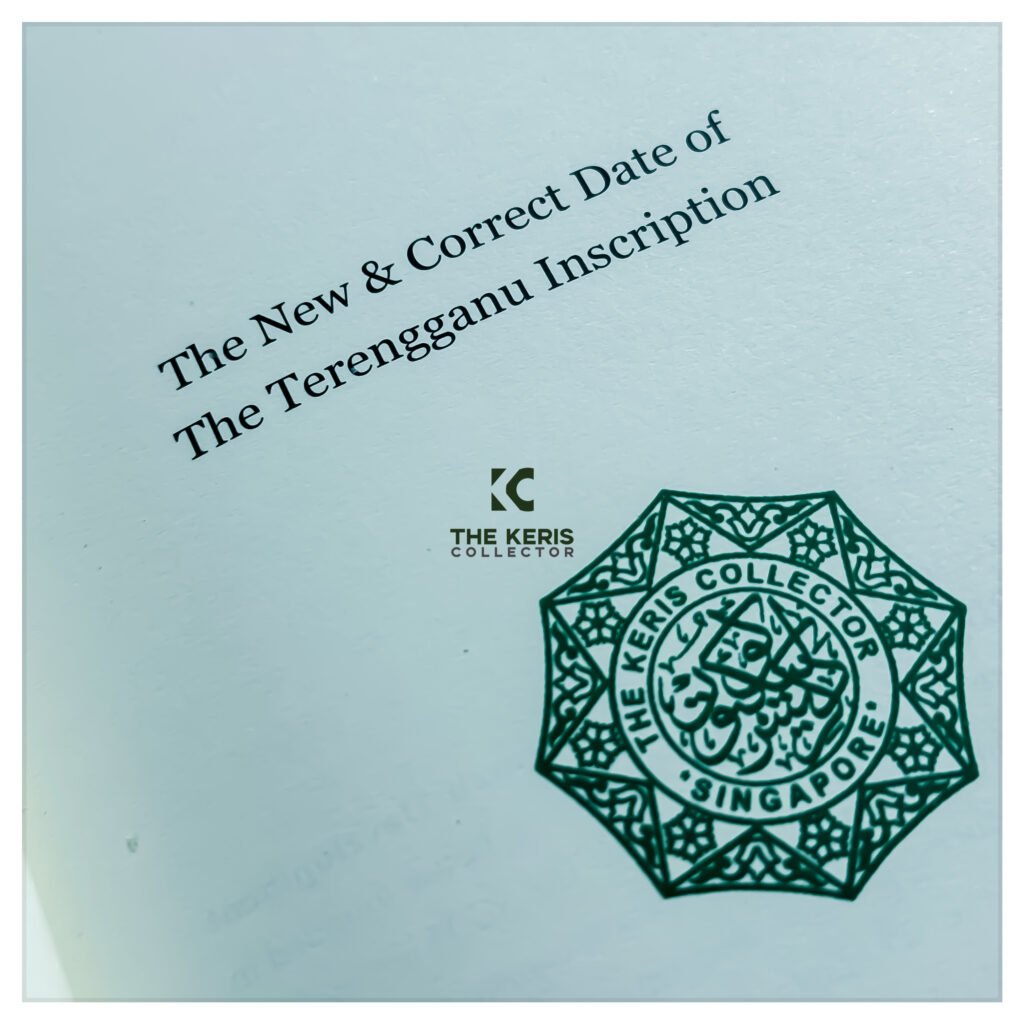
I grew up in a time when ex-libris bookplates were still quietly present in homes and personal libraries. They were small printed designs or stamped seals, placed carefully on the inside cover of a book. A mark of ownership. A signature of a journey. A gentle, almost poetic way to say: this book belongs to me, and I belong to it.
The term ex-libris comes from Latin, meaning “from the library of.” The tradition dates back to the 15th century, when printed books were still rare treasures. Book owners — scholars, nobles, collectors — affixed personalised plates to honour their collections. The designs were often beautiful: crests, initials, symbols of heritage, or scenes reflecting a personal philosophy. To place an ex-libris was not merely to mark ownership. It was to acknowledge the book as something worthy of keeping, learning from, and passing on.
Over time, that practice faded. Books became cheaper. Digital took over. And the idea of a personal library became less of a legacy, and more of an incidental shelf.
Yet, here and there, the old world still speaks.
I sometimes browse second-hand bookstores or receive preloved volumes from collectors. Every so often, I open the cover and find an ex-libris inside — an elegant monogram, a crest, a hand-drawn motif. And in that moment, I feel a quiet heaviness. Someone once loved this book enough to claim it. To catalogue it. To make it part of their intellectual world.
Now the book is here, separated from that person’s life — perhaps through inheritance, relocation, loss… or disinterest by the next generation. And that, in its own subtle way, is sad. Because a book with an ex-libris tells you: once upon a time, this truly mattered to someone.
A Personal Return to the Tradition
My own journey with books has been a long and familiar one. I read, I lend, I trade, I borrow — and I forget. Not intentionally, just through the passing of time and the blur of years. I realised at some point that I could no longer recall which books I loaned out, or which belonged originally to whom.
So in 2017, I decided to revive the tradition for myself.
I designed my own ex-libris seal. A simple, meaningful motif that reflects my identity, my work, and the heritage I treasure. From that year onward, every book that enters my library carries this mark.
Not to declare ownership in a rigid sense — but to say:
This book has been part of my story.
And if it leaves me one day, it will carry that story with it.
Legacy, More Than Ownership
None of us truly own books, not in the lasting sense. We are merely custodians for a time. We keep them, learn from them, and hopefully leave them better placed than when they came to us.
When I am gone, my books will go to my successors. And I hope they recognise the value not only of the books themselves, but of the knowledge and curiosity that shaped my life. The ex-libris is not a claim. It is a reminder.
A trace of who I was, and what I cared about.
A quiet message to the future:
Remember that knowledge is meant to be continued, not abandoned.
Sometimes, one small stamp inside a book can hold a lifetime of meaning.